
In 2025, the Election Commission of India (ECI) conducted the Special Intensive Revision (SIR) in Bihar. It made news. Those on the Left said it was the ‘biggest disenfranchisement exercise’. Now, with some members of the Mamata Banerjee-led Trinamool Congress (TMC) approaching the Supreme Court of India against the SIR in West Bengal, The Dossier thought it would be a good idea to do a series specifically on the SIR. In this three-part series, we will dive into the history and constitutionality of this exercise. Then, explore the arguments made against the Bihar SIR, what the SC said on them, and finally examine the objections made to the West Bengal SIR, and whether those objections make any sense, to see whether the opposition to this exercise holds water or their bucket is broken.
The Special Intensive Revision (SIR) of electoral rolls occupies a critical space in India’s democratic history. Over more than seven decades, SIR exercises have periodically redefined how the Indian state understands, verifies, and safeguards the ‘right to vote’. From the immediate post-Independence years, when the very idea of a national electorate had to be constructed from scratch, to the expansive and controversial Bihar exercise of 2025, the trajectory of SIR mirrors India’s continuous struggle to reconcile electoral integrity with democratic inclusion.
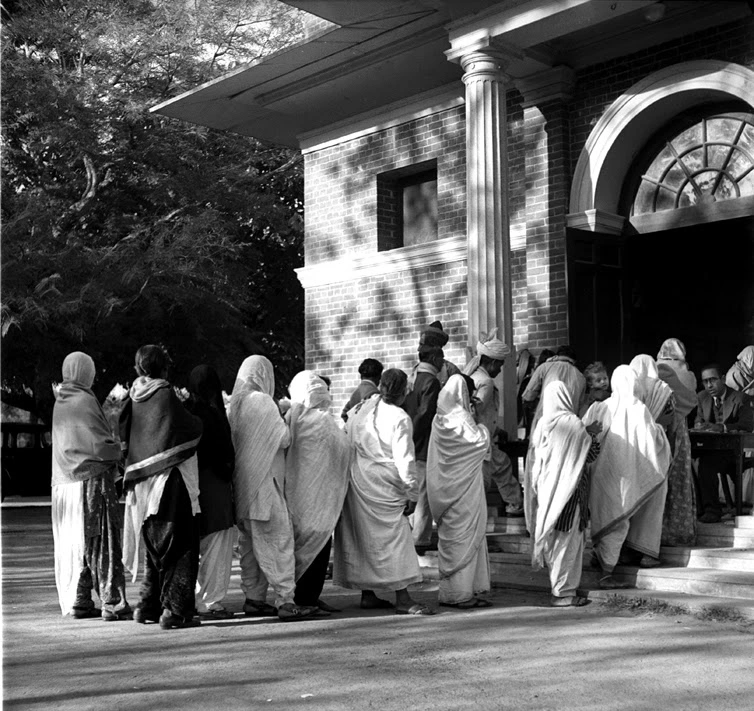
India’s first encounter with intensive electoral verification came in the early 1950s, when the newly independent republic faced the unprecedented task of preparing voter lists for nearly 173 million people. With limited infrastructure, widespread illiteracy, and immense linguistic and cultural diversity, the ECI relied on exhaustive ‘house-to-house enumeration’. These early exercises laid the foundation for what would later be institutionalised as SIRs. During those eight years, in which the Indian National Congress was in power throughout centrally, between 1952 and 1956, and again in 1957, 1961, 1965, and 1966, SIRs were undertaken. The purpose? To ‘stabilise’ the electoral rolls of a rapidly changing polity. These were years of learning by doing, as electoral administrators refined verification methods,‘corrected errors, and responded to population movement and constituency reorganisation.
By the 1980s, these exercises began to reflect a more mature electoral administration. Revisions of 1983–84 and 1987–89 marked a qualitative shift. They introduced standardised procedures across states, better documentation of disputes, and clearer systems for claims, objections, and appeals. In particular, the revision of 1987-89 stood out as ‘one of the most comprehensive exercises’ since Independence, addressing discrepancies that had accumulated over decades of ‘demographic churn’ and ‘uneven administrative capacity’.
The next decade, the 1990s, proved to be transformative. SIRs became catalysts for structural electoral reform. Two years later, the 1992 revision exposed ‘deep flaws’ in the accuracy of electoral rolls and created momentum for far-reaching changes. This culminated in the historic 1993 SIR conducted during the tenure of Chief Election Commissioner (CEC) TN Seshan—who, after retirement, contested the 1999 general elections as a Congress candidate—which coincided with the introduction of Elector’s Photo Identity Cards (EPIC). While roll accuracy remained the primary objective, the collection of photographs and identity data fundamentally altered Indian elections, adding a layer of visual verification that would become central to electoral credibility. Then, the 1995 revision consolidated these innovations, addressing gaps in EPIC distribution and strengthening photographic verification within electoral rolls.
The early 2000s marked the ‘last sustained phase of SIRs before a long hiatus. Between 2002 and 2004, a series of SIRs incorporated emerging digital technologies, improved database management, and better coordination across administrative units. Specifically, the 2003 revision, which included Bihar, was particularly expansive, setting new benchmarks in inter-state coordination for migrant voters, data matching, and quality control. The 2004 exercise largely served as a consolidation, ensuring that improvements from earlier revisions were institutionalised.
After 2004, the ECI largely relied on continuous summary revisions supported by digital roll management systems, online claims and objections, and periodic clean-up drives. SIRs, with their ‘enormous administrative’ and ‘political costs’, were avoided for over two decades. During this period, however, large-scale migration, urbanisation, and population mobility continued to reshape the electorate, leading to renewed concerns about duplicate entries, non-removal of deceased voters, and the inclusion of ineligible persons.
These concerns set the stage for the revival of SIR in the contemporary era. The Bihar SIR of 2025, the first in the state in more than twenty years, marked a decisive return to door-to-door enumeration—‘just like how these exercises started when we got independent’.
Constitutionally, the authority for SIR flows from Article 324 of the Constitution, which vests the supervision of elections in the ECI, and Article 326, which guarantees universal adult suffrage (a democratic principle that gives all adult citizens the right to cast a vote). These constitutional provisions are operationalised through the Representation of the People Act, 1950. Together, they empower electoral authorities to revise rolls, verify eligibility, and adjudicate claims and objections, while imposing a parallel obligation to ensure that no eligible citizen is excluded.
From the early years of nation-building to the digital present, the history of SIR presents this exercise as a pattern of ‘periodic correction’ and ‘recalibration.’ Each SIR reflects the anxieties of its time—establishing ‘legitimacy’ in the 1950s, enforcing ‘integrity’ in the 1990s, and managing ‘scale’ and ‘mobility’ in the twenty-first century.
The story of the 2025 Bihar SIR will unfold in the second part of this series.
Nancy Mahavir Sharma is an LLM graduate who writes on law, policy, and judicial developments.