
Masses, kings, philosophers, economists and now politicians have always been puzzled about the sources of wealth. Some have thought that wealth is in agricultural land; wars have been fought to capture agricultural land.
Some others have thought wealth is in minerals, and wars have also been fought to capture mineral-rich areas. Still others have claimed that some people are intelligent and hardworking, and they create wealth.
Claims of racial/linguistic/religious superiority have been made because of this; saying that so and so race/linguistic group/religious group is intelligent and hardworking and hence superior, and proof is that they are rich.
But Brazil and Argentina have agricultural land and are poor. Nigeria and Venezuela have oil and are poor. Many African countries have minerals but remain poor.
On the other hand, Japan, Singapore and Switzerland have hardly any agricultural land or minerals, but are super rich. Countries without change in the racial/linguistic/religious profile of the population have gone on to become rich or from rich became poor.
Because the source of wealth lies somewhere else.
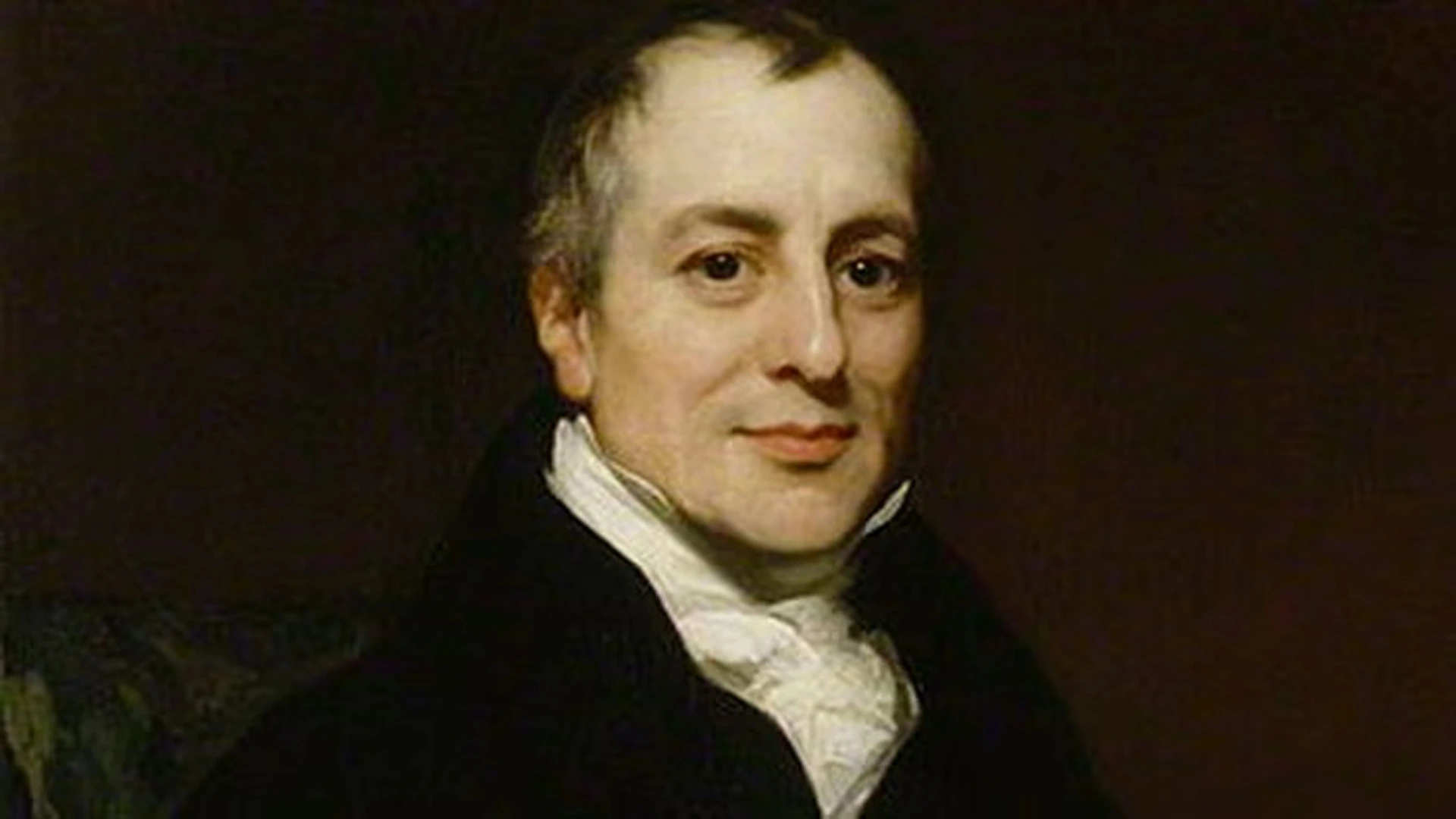
The entire wealth in the world is explained by economist David Ricardo’s law of comparative advantage. This Law was propounded to show the benefits of international trade, but in reality, it is applicable to groups within the same country—even to two individuals within the same group.
Further, in the context of international trade, it shows that if each country focuses only on the production of a few commodities and exports a surplus of them and imports the rest of the commodities it needs, it will have more commodities to consume with the same labour/effort. That is, with the division of labour with other countries, it will get richer than without any division of labour.
Ricardo showed it mathematically. Simply put, the fact that division of labour increases total production with the same factors of production is a mathematical law.
And the law is independent of the entities in question. The entities may be two countries, two states in the same country, two villages in the same state or even two individuals in the same village.
The mathematical calculations hold. Division of labour leads to ever-increasing production.
But division of labour is possible only if certain enabling conditions are present. Division of labour presupposes absolute legal and moral respect for private property (if a person cannot keep his products, he will not produce anything), freedom to produce any article a person wishes and freedom to trade with other people at mutually agreeable terms.
That is, Carl Menger’s law of Marginal Utility, which explains how things are valued by human beings, is allowed to be obeyed. Nobody uses violence or force to set prices, not even government. With these conditions present, men take to producing things they are most efficient at, trade their products at the terms best available to them, and buy goods most desired by them from others at the terms they agree to.
If instead coercion/force is used in deciding who produces what, trades with whom at what prices, the ever-increasing efficiency created by division of labour is lost.
If a person is assured of a profession or is prevented from producing what they wish, they lose all incentives to be ever more efficient. If a person is not able to set the price of their product, they are a slave and lose all drive. If a person is forced to buy articles they desire at prices they are otherwise not ready to pay, it is extortion and they soon withdraw from the market.
All of the above lead to destruction of the division of labour and loss of efficiency generated by division of labour. Without division of labour, the society/country soon passes into poverty. Poverty mostly leads to aggravation of the above factors, which destroy division of labour, setting a vicious cycle into motion, utterly impoverishing the society/country.
If human beings are free, safe, their property is safe, and they are free to trade, division of labour develops naturally. For example, nobody knows how many doctors a society needs or who should become a doctor.
If members of that society are free and medicine is a high-paying profession at a given point in time, more persons will put in the hard work needed to become a doctor.
But this soon leads to more doctors, suppressing their fees. Medicine will no longer be a profession most desired.
As more persons are doctors, some other low-paying profession faces shortage of labour, leading to increase in the wages in that profession.
The increase in wages attracts more persons to that profession and less to medicine, leading to stoppage of increase in wages of that profession and start of increase in the earnings of doctors again.
This reconfiguration of desired professions is always at work. Society is never stable, but it is always getting richer.
Masses, kings, philosophers, economists and politicians refuse to accept these basic laws of economics which have the force of mathematics.
They try to loot other countries through war, confiscate private property, set prices, and regulate trade.
They try to rig the labour market by mandating minimum wages and/or by importing labour from other countries.
They monopolize mining or certain industries under government.
They try to manipulate the choice of professions available to citizens by enacting laws, preferring some over others in a particular profession.
All these actions tend to destroy division of labour. How rich or poor a country is at any time depends solely on the degree to which the division of labour has been permitted or obstructed by violence/force by the government or other agents.
An honest, moral ruling elite will automatically establish conditions required for division of labour: sanctity of private property, freedom of trade, free minds, and honest adjudication of disputes.
Thus, an honest and moral ruling elite is the only source of wealth in the world.
Adhirathi is a defender of freedom.