
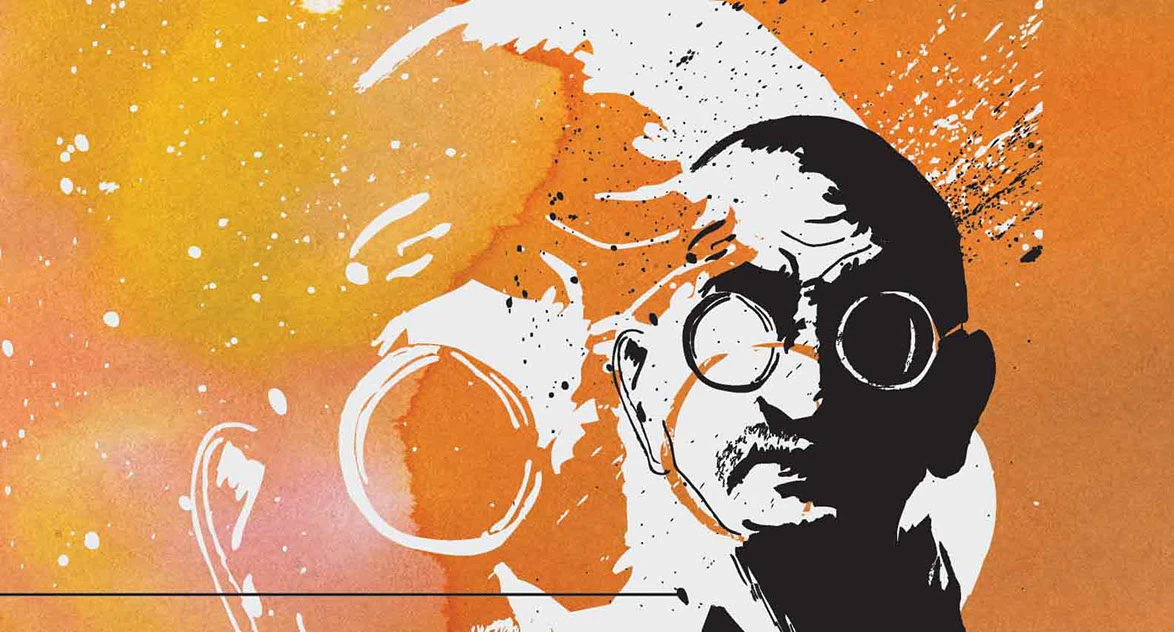
If I ask you to think about Gandhi. Mahatma Gandhi is the father of our nation would definitely top the charts of your brain. A website (mkgandhi.org) maintained by two Gandhian institutions: Bombay Sarvodaya Mandal and Gandhi Research Foundation, also repeats this statement.
However, it states a lie as well. It says, ‘… Constitution of Free India conferred the title of the Father of the Nation upon the Mahatma’. This isn’t possible. Article 18 (1) of the ‘borrowed’ Constitution prohibits the state from giving titles, except academic and military, to any Indian citizen. An RTI (Right to Information) reply by the Union cultural ministry, in January 2020, too, revealed that Gandhi was never conferred this title by any rule or ordinance of the Government of India.
It was Netaji Subhas Chandra Bose’s broadcast from Azad Hind Radio in 1944, spoken in exile, during war, to an undivided India that declared Gandhi as the ‘Father of the Nation’. A nation, which was undivided then, but got divided in 1947 — because of religion.
Bose’s address was emotional and strategic, not constitutionally appropriated.
On Mahatma. It was in September 1938 that an order passed by the General Administration Department of the Government of Central Provinces and Berar instructed Gandhi to be called a ‘Mahatma’ in all future correspondence.
When someone is called a Mahatma, it’s not merely the recognition of the moral greatness of one being; sometimes it’s a planned attempt to make a person unquestionable. He is a Mahatma, who are you to question him? Slowly and gradually, this becomes the standard answer of some, and eventually, it is engraved in your mind as well that this person is a Mahatma and all his acts pass through your eyes without questioning. You become a silent citizen and rationally numb.
In Indian tradition, Mahattva is lived, not declared. Maharishi Valmiki was not notified as a poet; Vedavyasa was not gazetted as a sage; Adi Shankaracharya was not proclaimed a Mahatma by an occupying power. Their authority flowed upward from Tapasya and truth, not downward from political validation to national recognition. But, with Gandhi, sadly, this cannot be said.
On Father of the Nation. Beyond law and history lies the deeper question of civilisational self-understanding. Bharat is not a nation born in 1947. We are a civilisation flowing uninterrupted through millennia. So, we don’t require any father. Our lineage is plural, layered, and eternal. The very idea of a ‘Father of the Nation’ is a Western nationalist construct, born in the age of revolutions and republics seeking ‘symbolic patriarchs’. To impose this framework upon us is to flatten our nation’s civilisational depth into a modern political realm.
This is not an argument against Gandhi the man, but against Gandhi the myth. A myth created by an order and repeated by a political class, even after independence, for not allowing anyone else from ruling the consciousness of the Indian minds. An attempt to keep those revolutionaries behind the curtains who spent over 10 years in the cellular jail. By the way, happy republic day.
Mohit Rawal is a law student at Campus Law Centre, University of Delhi.