
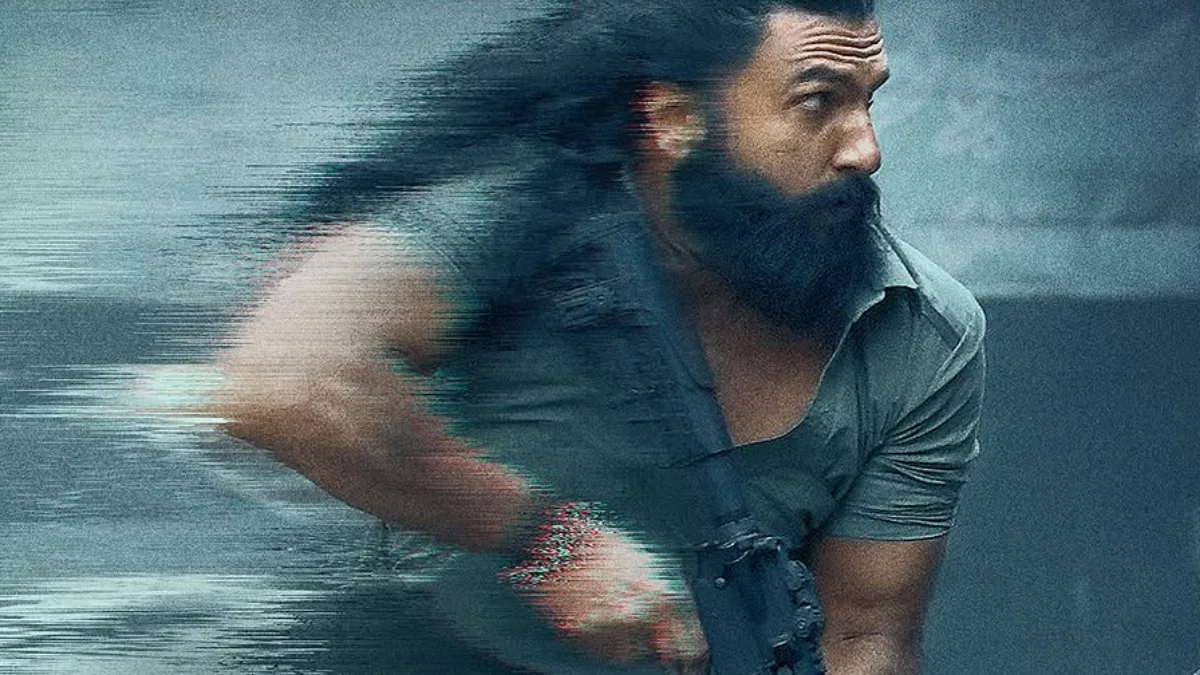
From the trailer itself, it was clear that Aditya Dhar had once again sharpened the same knife he used in Uri. Akshaye Khanna, Arjun Rampal, and Sanjay Dutt—each one—cast their spell with sheer skill and once again dominated the big screen. As for Ranveer Singh, right until the film’s release, there was only one question: would he even speak, or would he demolish every question with just his eyes? Directed by Aditya Dhar, this spy action film is still pulling audiences to theatres even in its fourth week. In terms of earnings, the film’s total net collection in India has crossed over Rs 740 crore, while its worldwide collection has crossed the Rs 1000 crore mark. With this, it has become the highest-grossing Indian film of 2025 and has even surpassed the lifetime collection of Kantara: The Legend – Chapter 1.
The curtain opens with the Kandahar hijack—a seven-day hostage crisis in December 1999, carried out by five Pakistani terrorists to secure the release of three jailed terrorists held in Indian custody in exchange for hostages. In the scene, IB Director Ajay Sanyal (R Madhavan) is seen striking certain deals with terrorists. After this, Sanyal decides that it’s time to uproot Pakistan itself.
For this, a mission is formed called ‘Dhurandhar.’
The most dangerous weapon chosen for this mission is Hamza Ali Mazari (Ranveer Singh), who infiltrates Lyari in Karachi, Pakistan. Lyari has been portrayed not merely as just another location but as a world steeped in violence—where fear, gang wars, and power coexist. It is here that Hamza comes face to face with one of the film’s key characters, Rehman Dakait (Akshaye Khanna). From this point onwards, as an anti-India terror conspiracy unfolds, all the characters gradually become interconnected.
The characters include Major Iqbal (Arjun Rampal) of Pakistan’s intelligence agency ISI, encounter specialist SP Aslam Chaudhary (Sanjay Dutt), and the biggest faces of money laundering—the Khannani brothers—all driven by the same objective: to keep shaking India’s foundations with terror. Within this network, Mazari slowly carves out his place. He isn’t fighting just one enemy; he is trying to infiltrate the entire system and hollow it out from within.
The film weaves together Pakistan’s politics, gang wars, fake currency, David Headley, and the planning of the Mumbai attacks in such a way that it feels as if four web series are running simultaneously.
Within days of release, the buzz around the film was driven by one song, one dance, and one character. Because of that song and Khanna’s style, all the limelight shifted to him, leaving Singh somewhere behind. Clips flooded social media, reels went viral, the Arabic-beat song caught fire, and Dakait’s swagger lodged itself firmly in public memory. But after watching the entire film, the picture looks quite different.
Khanna deserves praise for delivering a brilliant performance. His dance in the much talked song FA9LA by Flipperachi elevates the character’s confidence even further. Dakait’s menace grip the camera, and for a few minutes, it feels as if he will devour the screen. But that impression is scene-based, not reflective of the entire film. Once the film ends, it becomes clear that Dhurandhar is not a battle for stealing the spotlight. If Singh is the backbone of the film, Khanna is its cutting edge.
Even before Dhurandhar, Khanna has repeatedly proven that he is a master of the silent art. His portrayal of Dakait speaks little, yet creates an atmosphere purely through presence. Singh’s Hamza is a spy who is broken inside, calm on the outside, and constantly restraining his emotions. He isn’t here to shout or deliver punchy dialogues. He observes, waits, and strikes at the right moment. That is why his performance grows on you slowly. In short, both compete with each other through just their presence; dialogues come later. But whatever you want to call it, both have rocked their roles.
Some scenes in the film not only send chills down the audience’s spine but also force them to think. For instance, there is a scene where Hamza hands a weapon to a young man named Ajmal Kasab—the very same Kasab who was captured during the 2008 Mumbai attacks. Here, the film suggests that espionage is not just about patriotism; sometimes, it also burdens you with the weight of crimes committed against your own country.
Another deeply disturbing and emotionally jarring scene is Iqbal torturing a spy. Watching this, even Hamza—who usually endures everything silently with complete emotional control—shudders for the first time. Fear appears in his eyes for the first time. This moment makes it clear that a hero is not someone who feels no pain, but someone who, despite fear, recommits himself to completing the mission.
This scene is not merely about one character’s suffering; it exposes the bitter truth of the entire espionage world. The only promise made to spies is that if the mission succeeds, the country will remain safe. Their identity, their name—everything is left behind in the darkness of anonymity. The film shows that in return for their sacrifices, they receive neither recognition nor the guarantee of an honourable martyrdom. Sometimes, the country even refuses to acknowledge them as its citizens. No tricolour, no salute, no official statement—just a file that gets closed, and the story ends. Dhurandhar tells the story of these unnamed heroes whose names will never appear in history books, whose martyrdom may not even be honoured with two minutes of silence, yet because of whom millions of people in the country remain safe.
At a time when many Bollywood directors and producers avoid such subjects out of fear of setting a narrative, filmmakers like Dhar, choosing to bring this reality to the big screen, are immediately put in the dock within their own country. Some ‘so-called intellectuals’ knowingly have labelled the film ‘propaganda’, questioned the director’s intent, and even dismissed the entire story that lays bare the most painful truths of our security apparatus. In doing so, they strengthened the very narrative that Pakistan wants to spread. I remember a dialogue by Sanyal that fits this situation perfectly: ‘India’s biggest enemy is Indians themselves; Pakistan comes second.’ Because when a country views a story about the anonymous sacrifices of its countless heroes with suspicion first, the danger doesn’t lie across the border—it grows from that very mindset and ideology. Dhurandhar points toward this danger, and perhaps that is why the film has not only created havoc at the box office but has also sparked a national debate.
Truth be told, the biggest ‘dhurandhar’ of the film is director Dhar himself. He chose a subject without fear, likely knowing that after making such a film, he might even face international threats. Yet despite that, the workings of the ISI, terror funding, money laundering, and the nexus between gangs and state machinery are portrayed so convincingly that viewers begin connecting the dots on their own. Perhaps that is why people don’t just talk about performances or action after watching the film—they also ask, ‘Could all this really have happened?’ And when cinema provokes such questions, it means the makers have done their job correctly.
Dhurandhar does not claim to be a case file, but it certainly shows how thin the line is between imagination and reality in the world of espionage and terror. Walking that line, the film unsettles viewers and forces them to think—arguably the greatest success of any spy thriller. Overall, audiences should definitely watch films like this because portraying the full truth of such subjects with courage and fearlessness is no easy task. Dhar has accomplished this remarkably well. Instead of piracy, one should spend their own money and watch this film in a cinema hall. Bollywood does not make films like this very often.
Anuradha Mishra is an independent journalist based in Lucknow.