
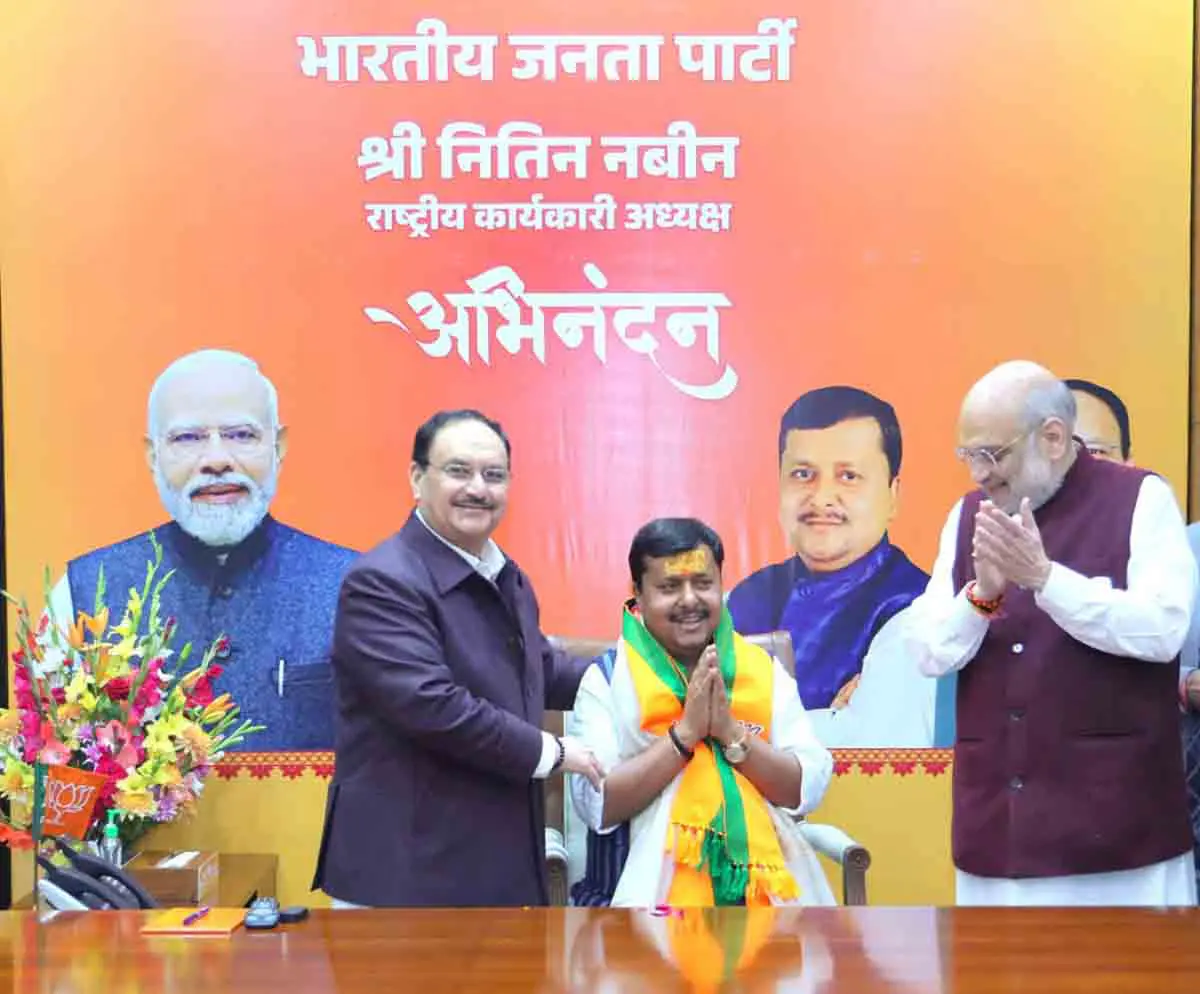
On the very day Rahul Gandhi stood at Delhi’s Ramlila Maidan on 14 December, raising the allegation of so-called “vote theft” during the Vote Chor, Gaddi Chhod rally, the Bharatiya Janata Party (BJP) announced the appointment of 45-year-old Nitin Nabin from Bihar as its National Working President. This was no coincidence. It was a carefully calibrated political response.
Prime Minister Narendra Modi and Home Minister Amit Shah struck multiple targets with a single move. At a moment when the opposition was questioning the integrity of elections in Bihar, the BJP chose leadership from that very state, signalling institutional confidence—in the process, in the people and in its leadership.
The timing underscores the BJP’s strategic acumen: while the opposition focused on highlighting electoral issues, the party moved decisively to consolidate leadership and organisational strength in Bihar.
In contemporary Indian politics, symbolism often travels faster than policy, and the BJP understands this better than most. Politics, at its core, is strategy, and those who know when and how to act often remain undefeated. The BJP has mastered this art, and Nabin’s elevation is a textbook example of strategic timing and messaging. By contrast, Gandhi’s visit to Germany during the ongoing Winter Session of Parliament suggests a lack of similar strategic foresight on Congress’s part.
Political pundits, meanwhile, once again misread the BJP. Names making the rounds for the National President included Dharmendra Pradhan, Shivraj Singh Chouhan, Bhupender Yadav, Pralhad Joshi, Keshav Prasad Maurya, Vinod Tawde and Sunil Bansal, among others. Yet, true to its tradition of doing the unexpected, the BJP chose Nabin—asserting control not just over organisation, but over the narrative itself.
Long before his national elevation, Nabin had already demonstrated a flair for strategic symbolism. At the time, Modi—then Chief Minister of Gujarat—arrived in Patna for a BJP National Working Committee meeting. Across the city, posters thanked him for donating Rs 5 crore to the victims of the Kosi floods. These posters prominently featured both Modi and Nitish Kumar, who were not only the leading faces of the OBC community in the country but also considered potential candidates for the Prime Minister’s post. From posters to power. Fifteen years later, Nabin is the BJP’s National Working President and is widely regarded as a future National President.
This episode is a poignant reminder of how a young legislator had already left an indelible mark on national politics long before entering the limelight. Annoyed by the newspaper advertisements, Kumar canceled a formal dinner party that had been arranged for BJP leaders. This action increased mistrust and became a turning point in BJP–JD(U) relations. The posters featured an old rally photograph of Modi and Kumar shaking hands. These posters had been put up by Nabin, who was then a young BJP leader in Bihar.
Often referred to as the “Nitin Gadkari of Bihar,” Nabin built an extensive road network in the state and later strengthened the BJP as in-charge in Sikkim, eastern Uttar Pradesh, and Chhattisgarh. His appointment sends a clear message: the BJP does not practise populism—it rewards competence.
Within the BJP, ability, commitment, and organisational discipline matter. Those who deliver on the ground are recognised. Nabin’s journey—from grassroots work to organisational leadership and electoral management—embodies this ethos.
The BJP presents Nabin’s elevation as part of a generational transition. The message the BJP seeks to convey is unambiguous: from a worker who once laid carpets at party meetings to a young leader who dared to hoist the national flag at Lal Chowk in Kashmir, anyone with courage and commitment can rise to the very top.
The party’s organisational culture was on full display when Vinod Tawde, the BJP’s National General Secretary, was seen receiving Nabin at the airport. There was a time, Nabin, who would receive Tawde. Today, roles have reversed seamlessly. In the BJP, the organisation stands above individual positions.
Contrast this with the Congress, and the difference becomes stark. Leadership in the Congress has largely remained confined to a single family. Gandhi and Priyanka Gandhi’s political inheritance was decided at birth, not earned through organisational work. The caste and social composition of the party’s top leadership has also remained narrow. Advancement often depends on proximity to the Gandhi family or a particular pedigree. For grassroots workers, the path upward is almost closed. Himanta Biswa Sarma’s confession acts as evidence in this.
The BJP, by contrast, has institutionalised diversity and social mobility. Modi is the son of a tea seller. Shah comes from an ordinary middle-class background. The party’s leadership reflects aspiration rather than ancestry.
Nabin’s rise marks a new chapter in Indian politics—one that reinforces the idea that merit, dedication, and hard work, not lineage, determine success. It reinforces the BJP’s long-standing argument about organisational mobility.
This confidence in Nabin was visible long before his formal elevation. During the recent Bihar Assembly elections, when rebellion broke out among some BJP leaders in Patna and Buxar over ticket distribution—an issue even Shah could not immediately resolve—Modi convened a closed-door meeting before his Patna roadshow. Present were Bihar BJP president Dilip Jaiswal, Deputy Chief Minister Samrat Choudhary, state in-charge Vinod Tawde, election in-charge Dharmendra Pradhan, and Bankipur candidate Nabin.
When the state president attempted to speak first, Modi interrupted and asked Nabin to present his assessment. The room fell silent in surprise. The signal was unmistakable.
A similar episode occurred during the 2022 Uttar Pradesh Assembly elections, when Modi was holding meetings in eastern Uttar Pradesh. He publicly entrusted Nabin—then the region’s in-charge—with the task of reconciling local leaders, remarking that no one could do it better.
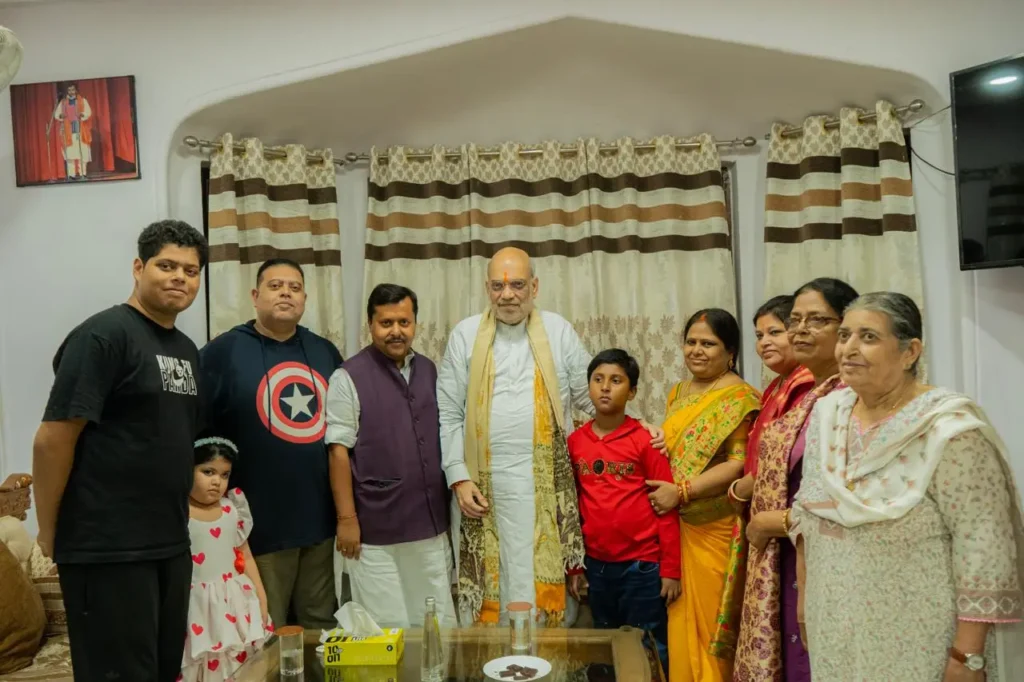
In April 2025, Modi’s election rally in Madhubani was also placed under Nabin’s charge. He was entrusted with stage management at the oath-taking ceremony following the BJP’s victory in Bihar. During the campaign, Shah even visited Nabin’s home to accept Chhath prasad—a gesture laden with political symbolism.
These are not accidents. They are indicators of trust.
Nabin’s appointment does not merely elevate an individual; it reinforces a political model—one where performance matters, loyalty to the organisation is rewarded, and leadership is cultivated, not inherited. In an era dominated by dynastic entitlement, this remains the BJP’s most potent ideological contrast.
Dushyant Shukla is a political analyst and independent journalist based in Delhi.