
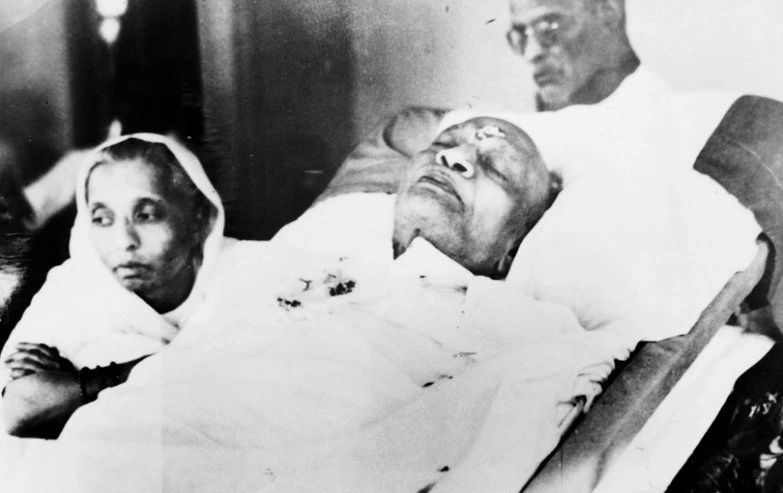
They say people realise the value of an individual only once he or she is gone. Alas, this cannot be said for India’s first Prime Minister, Jawaharlal Nehru. Sardar Vallabhbhai Patel died on 15 December 1950. Within an hour of his passing, Nehru instructed his ministers and secretaries not to attend Patel’s funeral; he withdrew the government car allotted to Patel and ordered officials of the Home Ministry to fund their own expenses themselves if they wished to attend the funeral of a man who was India’s Home Minister until 9:37 am that day, when he breathed his last. That day, humanity died at Nehru’s doorstep.
The tensions did not end there. Kanhaiyalal Maneklal Munshi, former Union Minister of Food and Agriculture (1950–52), records in Pilgrimage to Freedom that Nehru even requested former President Rajendra Prasad not to attend Patel’s funeral. Prasad ignored the request. NV Gadgil, former Union Minister for Works, Production and Supply, Satyanarayan Sinha, former Union Minister of Parliamentary Affairs and Information and Broadcasting and VP Menon, former Secretary of the States Ministry, were among other prominent figures who likewise chose to attend, declining to be bound by such instructions. Some orders, even from the highest office in a nation, are not worth following.
They had different approaches, though disagreement shouldn’t have hardened into personal animosity. In 1948, Patel was for sending the Indian Army to end the then-ruler, Nizam’s blood-soaked rule in Hyderabad. Nehru was against it. He even called Patel a ‘total communalist’ for this. In another instance, on North East, Nehru wanted the Foreign Ministry to deal with it, which was something Patel was always opposed to. As per the 2011 Census, out of the seven North Eastern states, five have a majority or significant Christian population. Internationalism, it seems, does not always go well.
The unfriendly attitude of Nehru and then his party, Congress, warrants a closer examination. No centrally sponsored national monument was built for Patel during their over 50 years of rule, when hospitals, colleges and what not can be counted on the names of the Gandhi family on fingertips; this speaks for itself. Nehru is often attributed with a sarcastic suggestion that wells be dug in villages in memory of the ‘peasant leader’ Patel, which tries to answer the unheard. Today, Congress speaks of OBC rights. A towering OBC leader like Patel was ignored for decades; whether this was due to a complex of inferiority or intellectuality is a question for time to answer.
Hindol Sengupta writes in The Man Who Saved India that it was Patel’s practicality that turned India into a nation. Dr Rajendra Prasad noted in his diary in 1959, ‘That there is today an India to think and talk about is very largely due to Sardar Patel’s statesmanship and firm administration. Yet we are apt to ignore him’. These assessments underscore how Patel’s decisive role in nation-building was foundational, even as his legacy was consistently sidelined.
History is the greatest notetaker. Had Sardar Patel not been there, India would today have been fragmented into pieces. The Statue of Unity, in memory of Patel, stands tall, representing the great Sardar, while the current dire condition of the Congress offers a notable contrast.
Dushyant Shukla is a political analyst and independent journalist based in Delhi.